
Party Source: Celtic.
Other names: Samonios (Gaul) Trinouxtion Samonii (Gallo according to the calendar of Coligny), Oíche Shamhna (Modern Irish), Calan Geaf (Welsh), Samhain (Old Irish), Samhuinn (Scottish Gaelic), Kala-Goanv (Breton), Samhain (Galician).
Approximate date: approx. October 31 (corresponding to the first frost in the British Isles, juniper flowering, ripening pumpkins or turnips ...), in Scotland, often celebrated on November 11.
Much has been spoken of Samhain, or Oíche Samonios Shamhna, and little new can be said on this holiday, possibly one of the most important of the Celtic cultures. At that time, as you may have read a million times, the barrier between the living world and the Other World is very vulnerable. By that we mean that contact with the Exchange and Death is very intense, and so, as the feast of the natural cycle, it acquires a magical or esoteric nuance. The night of Samhain is, in many cases, the "eternity": the time is abolished and the world of Sídhe opens the world of the living. But not all is darkness in the Gran Fiesta, as it renews the fertility of the earth, will rest during the dark half of the year (Samhain to Beltane, as stipulated in the schedule de Coligny), and on that night he thanked all the fruits that has given us.
The first time you mention Samhain with that name is in the Coligny calendar, a bronze tablet written in Gaul, which called the lunation Samonios far this month October to November, therefore, the logic is that the party is called as the last day of that month. However, this event lasted three nights, "Trinouxtion Samonii", something that continues to show its crucial importance. The fact is the considered the first day of the year is based on the fact that the Celts began to run from the darkness and therefore, if the month is counted by the lunar months and the day after night, I would expect the year to have from the winter, and the first day of winter was, as we are told, Samonios.

Still, Samonios etymology is unclear. Supported the hypothesis states that Samhain refers to the end of the summer Sam ('summer', from Proto-Indo-European * Semo) + Fuin 'final'. Another hypothesis is that Samonios comes from Proto-Celtic * Samani 'assembly' and possibly * Samani turn came 'end of summer. " In both cases, the etymology leaves no doubt that this is an event closely linked to the seasons, the agrarian calendar and the tribal community.
In Samonios generally, we celebrate the life and death, the last harvest, the ancestors are remembered and revered natural cycle for the most dark of the year, culminating in the Bealtaine. In ancient Celtic traditions have been preserved as the bringing into the fold between two bonfires to purify and protect it during winter. The animals were slaughtered left over, keeping a portion to store and another as an offering to the gods.
Calendar and Concessions for adaptation:
But there are certain aspects before they would have to be taken into account since the calendar has suffered more than a change from the time of the Celts, and the reasons and ways in which the pagan festival was adapted to Christianity also give us clues to the nature of Samhain.
The original Christian feast of All Saints Day was celebrated on May 13, but the precedents on which the party based dating from the early seventeenth century, when Pope Boniface IV devoted a Roman temple dedicated to all the Gods of All Saints Day. It would be a century later when Pope Gregory III changed the date to the holiday, moving it to November 1, along with a corresponding vigil, which in English is called "All Hallow's Eve", from which derived the present name of Halloween ' at. The party changed its date, eliminating any possible connection with pagan remnants that could preserve.
Another issue to be addressed would be the date of the original Celtic festival, which has been extensively .
(From Tairis.co.uk):
"As the calendar we know today was established in Britain in 1751. Before the introduction of the Gregorian calendar, Britain used the Julian calendar classic. Pope Gregory XIII changed the Julian calendar originally in 1582 by adding days to prevent the stations back, putting the calendar in line with orbit around the Sun in about 365 days.
Britain initially resisted change and therefore continued using the Julian calendar for 200 years. This gave as a difference of 11 days between the Julian calendar and Gregorian at the time when Britain passed the Gregorian calendar. When the Gregorian calendar was adopted on January 1 in the Julian calendar became the 12th in the Gregorian calendar. This was not very popular among the people, and some areas have resisted change. Even in the second half of S. XIX, some people in Scotland (especially in rural areas) still held their celebrations in accordance with the Julian calendar, and during that time schedules had a difference of 12 days.
The dates given to us the celebration of Samhain is should take, therefore, both calendar. Gregorson John Campbell, for its part in the islands and the Highlands always followed the Julian calendar. In the majority of Scottish rural communities was celebrated Samhain probably 12 or November 13 throughout the nineteenth century. Ronald Black suggests that the Gregorian calendar began to be used only in the year 1872 to
Anyway, the idea of \u200b\u200ba fixed date for Samhain is not so clear. Speaking on Beltane, Alexander Carmichael notes that although the party date was usually the first of May, the celebrations marking the beginning of summer began when it was considered appropriate - when it was warm enough to get the animals, when the grass was green . This could be either before or after May 1, depending on the time (...) Knowing that normally Samhain marked the end of the harvest and the onset of winter, it is possible that in some areas the date of Samhain was flexible, and making the November 1 deadline after which it was considered taboo pick fruit or harvest. "
Deities:

Dagda and wife Uinnius, Jim Fitzpatrick
Surely the gods of fertility, of the tribe of Death and the guardians of the Underworld should be the most revered gods during this time. The Dagda, the Morrighan, the Matronae, Taranis, Esus, Sucellos, Cernunnos or Cathubodua are some of the gods mentioned. I quote some parts of an article that talks about Alexei Kondratiev deities Samhain:
(Alexei Kondratiev article in GBSI):
"Often, the common denominator of the deities which they are honored during this festival are the horns, known as Cernunnos, which turn is related to the Fianna, whose attributes symbolize the seasonal change and the interaction between nature and culture. The horns are a seasonal phenomenon: they fall in winter and begin growing in late summer, reaching its peak in spring. (...) The seasonal importance of the horns is represntado in the traditions of southwestern Brittany, where they cook the Kornigou, horn-shaped rolls. Since several versions of the myth we can deduce that the Horned God is separated from a spouse goddess (which is reflected in the Irish mythological episode from Dagda and Morrighan) during the light half of the year, but returns with the dark half its within the Other World - leaving the horns that define it. (...) We see echoes of this myth in other Indo-European world, as in the ritual calendar of India, explains Divali, the Festival of Lights, in which Lakshmi, the goddess of wealth and welfare , leaves her consort Vishnu (who falls asleep during that time) to return temporarily to her first husband, Kubera, god of the property.
The goddess of the earth also changes its appearance at the time, the fertile part is removed to another world where he joins his consort, but in our world there is only spectral appearance, leaving the hostile land inhospitable for life. In the Scottish Highlands is the time of Bheura Cailleach, the crone who wanders through the hills bringing storms and bad weather, while in Wales we hear of Hwch Gwta Ddu ("black pig with no tail") that monitors in the dark . But at the end of the day are all aspects of the same being, we depend Provider, you have to nurture itself back to alternating periods of action and rest, and must pass through death and darkness to find the true renewal .
On the nature of religion has been discussed a lot too, but personally I'll take an extract from the book of TGE Powell, The Celts :
"In Samain were made, no doubt, ritual sacrifices, but has not survived in any physical description. (...) These concerned the renovation of the fruitfulness of the earth and its inhabitants, and had to do with the tribal union of the god with the goddess of nature that powered the tribal territory and, at times, be embodied in a river or another element of nature. Exemplary in this regard are the stories of the union of a god, the Dagda, with a goddess, the Morrighan: or, alternatively, with Boann, the deity of the River Boyne. (...) [On that day] the magical forces out of the caves and tombs, and even every man could be received in these realms, while the monsters trying to attack with fire and poison the strengths of the royalty. "
Ireland: mythology and celebration:
We know that far into the Middle Ages, Samhain was the most important holiday in Ireland thing that involved a large gathering at Tara that lasted about three days. In all hills fires were lit, indicating where people should meet. In the traditional sense and folklore of the party, just know better. But fortunately we have a mythological basis which gives us the basis for the celebration connected with the mythical race of Tuatha de Danann in their ongoing battle against the race of Fomoré, who came to this world of Samhain to be held accountable.
Tuired In the Cath Maige we explain a puzzling passage relating to the night of Samhain, in which the god of fertility and abundance, the Dagda, joins the Goddess of Death and the battle Morrighan, while she, who appears with the nickname "Uinnius Women" in the river washes the clothes of those who die in the battle against Fomoré-sexual union between these gods ensured the welfare and fertility of crops the tribe and its members. After having sex, Morrighan account to God's plans Fomoré race, and with knowledge of its strategy, the Dagda is able to beat them.
addition to this myth, we have the Echtra Nerai, 'the adventure of Nera', which is also in the Ulster Cycle.
Nera Connaught was a warrior who had to prove their strength to King Ailill, to win gold and the sword of the sovereign. The test Nera had to overcome was the night of Samhain in a gallows where two prisoners had been hung the day before, and tie a string or a piece of straw at one of the ankles of the dead. Many had tried but the spirits they had been frightened and had become embarrassed to Ailill. In contrast, Nera get complete its task but is caught in the Underworld until next Samhain. When he returns, neither King nor his wife Medb Ailill believe him, but the warrior demonstrated by bringing flowers that grow only in summer.
Scotland bans (extracted from Tairis.co.uk):
"There is a particular source does not say Samhainn nothing about, and yet a lot of information on other festivals. This is the Carmina GADEL of Alexander Carmichael, who just mentioned that day. Clearly the explicit supernatural elements of this celebration is much more evident than in the other four High Holidays, and for that reason, Samhainn was not compatible with Christian sensibilities Carmichael - who believed that it was too pagan Samhainn to draw the attention of decent people.
In some parts of Scotland, the perception of the celebration as too pagan (especially in the Protestant church) was sufficient in local churches to ban the celebration of the day, including lighting fires, something that was closely associated with pagan celebrations. This tense relationship with the elements 'infidels' of Samhainn which coincides with the celebration of All Saints Day, can be seen from early 1589, when fires were lit Hallow'mas to celebrate the festival in Stirling and were banned by the Presbytery (the local body of the Presbyterian church in the area). Similar rules were put in 1648 in the Fife and Slains, and Elglin in 1641 people were prohibited from selling nuts (which were used to guess) in the evening on Halloween. Given the persistence of the celebrations - although more and more isolated parts of Scotland and Ireland - until well into the twentieth century, such orders had little effect locally. "
Celebrate Samhain in Celtic Reconstructionism (ideas for all paths and traditions):
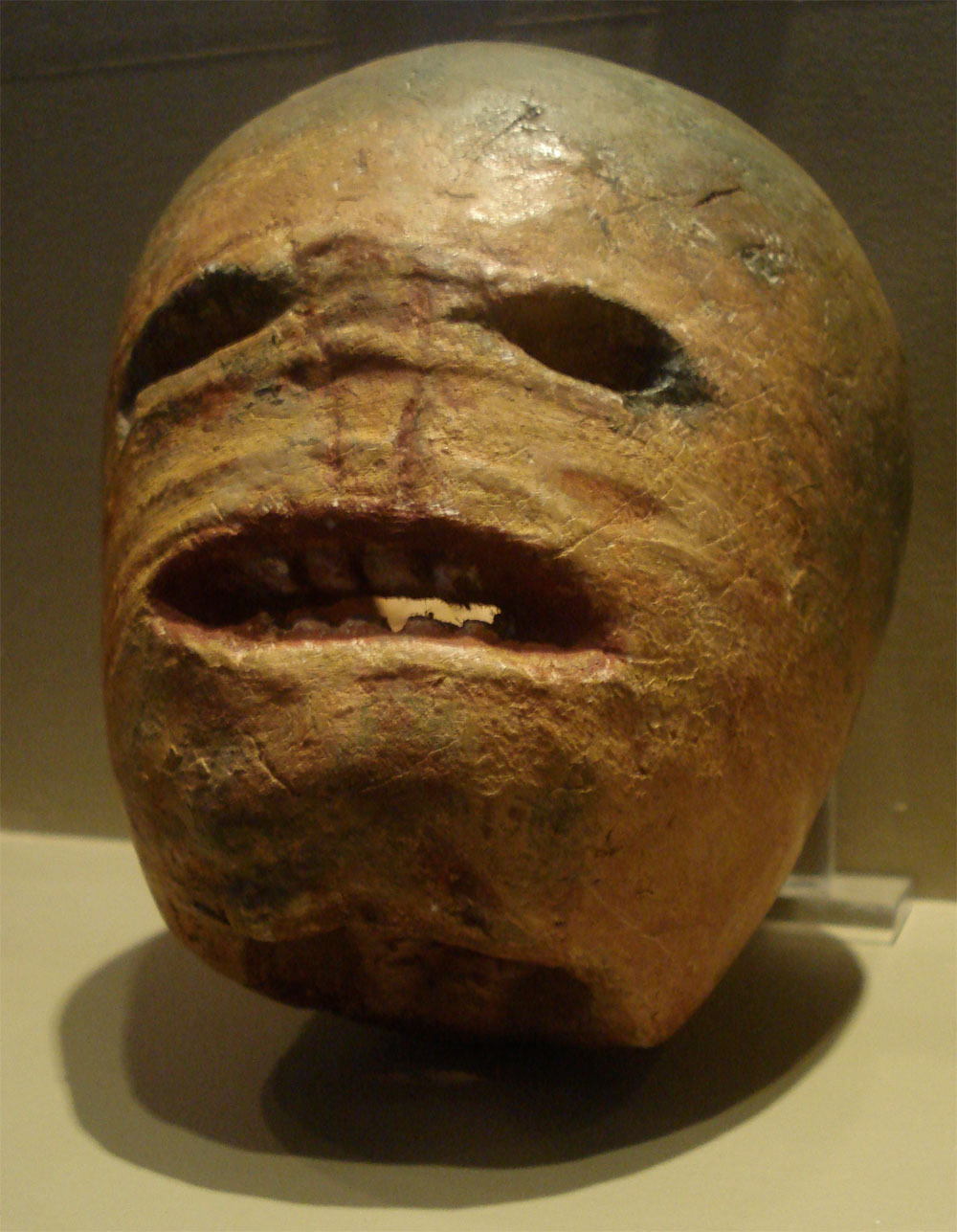
traditional lantern made from a turnip
celebrate the feast of Samhain , is always left a place at the table for the dead, as well as on the altars of those still held as part of their beliefs. Everything for the dead can never be eaten by the living, because it is a personal gift. It is further believed that during and after Samhain, all the plants and berries are the property of the spirits, and are no longer suitable for human consumption to Bealtaine. Everything that had not been harvested was also left for the Sidhe.
divinatory tasks are very common on this holiday, even so, if they decide to take, protect yourself far from the influences that these imply. There are in fact divination techniques that over time have been transformed into children's games. Citing Paganachd: "One of them is the Gaelic tradition guessed by the skin of the apple, which is peeling an apple in one go without breaking the skin, the skin is pulled back from someone, and supposed the skin will draw the first initial of the name of someone's future husband, or the first letter of the answer to someone. Another guessing game involves appointing two nuts with the names of two people, and put into the fire. Prophecies are held by the manner in which the nuts are toasted or Petan, and if they move closer or away from one another. "
Telling stories and anecdotes from the past family, as a reminder of the dead is very common in Celtic lands during Samhain. But surely one of the most celebrated in the Celtic festivals are the fires (in Scottish samhnag) as in any seasonal holiday, symbolizing fire, the sun's heat, which in this case will decrease. The fire favors the union of the community, which also takes a social sense. Since there were large meetings and community meetings, was considered a good time to carry out economic treatment of land and political.
Celebrating Samhain the traditional Scottish style (Tairis):
- If possible, avoid attracting unwanted attention, especially after midnight when "Good people" (AOS Sídhe) is more active. A small cross of Rowan (Rowan) tied with a red ribbon in his pocket, can safeguard the traveler for damages if necessary.
- Turn on Samhnag (Bonfire of Samhainn) or call if it is not possible to fire in the darkness of holding Samhainn. Torches can be placed heather, to protect from evil influences. You can scatter the ashes of the fire around us for the same purposes and to ensure fertility in the coming year.
- Make one or more lanterns made from turnips.
- Make a feast to celebrate Samhainn, preferably with lots of friends to celebrate joyfully, gingerbread, curd, Colcannon, mashed potatoes, cookies, apples, hazelnuts, cabbage and any another product of the season.
- Experiment with some guesses Samhainn during and after the celebration.
- Make an offering and celebration libation for the gods and ancestors.
- Make Bonnach Samthain for breakfast on the morning of Samhainn.
- To the eve of November 1, leaving some food and drink for the dead in a place specially prepared for them before retiring to bed, it is said to roam freely on this night and wish to visit their friends and family. Be sure to provide proper hospitality.
- Lighting candles in the sanctuary or altar to honor those who have recently died, and to the ancestors.
Samhainn Celebrating traditional Irish style (Tairis):
- If possible, avoid attracting unwanted attention, especially after midnight , when "good people" is more active. A small cross of Rowan (Rowan) tied with a red ribbon in his pocket, can safeguard the traveler for damages if necessary.
- Turn on Samhnag (Bonfire of Samhainn) or call if it is not possible to fire in the darkness of holding Samhainn. Torches can be placed heather, to protect from evil influences. You can scatter the ashes of the fire around us for the same purposes and to ensure fertility in the coming year.
- Make one or more lanterns made from turnips.
- Make a feast to celebrate Samhainn, preferably with lots of friends to celebrate joyfully, gingerbread curd, colcannon, mashed potatoes, cookies, apples, hazelnuts, cabbage and any other product on the season.
- Experiment with some guesses Samhainn during and after the celebration.
- Make a Parshell Samhainn cross on the door and secure it for the protection of the coming year. The Parshell, do this: take two straight sticks and tie them together, filled with straw in between, until only about an inch of wood for each arm. The Parshell should be replaced every year, putting the old Parshell elsewhere in the house, outside the home (or in this modern age) maybe even the car. Or the old Parshell burning at the stake.
- Make an offering and a drink in celebration to the gods and ancestors.
- To the eve of November 1, leave some food and drink for the dead in a place specially prepared for them before retiring to bed, it is said to roam freely on this night and wish to visit their friends and family. Estate appropriate insurance offering hospitality.
- Lighting candles in the sanctuary or altar to honor those who have recently died, as well as our ancestors.
Samonios Celebrating Gallic style, Breton and Manx:
- Samhain, in all cases coincides with the time of killing the majority of herds (that is why the feast nights of Samhain were based mainly on cuts of beef and pork), and only kept the herd that was suitable for breeding the following year. This resulted in lavish feasts and sacrifices. Also used to keep all crops harvested, preserving and preparing to survive the winter.
- not attend Samhain was seen as a bad omen among the Gauls, and considered not to hold a party with the tribe led him to madness (see History of ULAT) .
- Celebrate places high, such as hills, terraces, and lighting a fire during the celebration and feast, but have turned off all the other fires, symbolizing the death of the year. Other fires are lit have to leave the fire, tying all the families of the tribe. Walking between fires was also a widespread tradition in both the islands and the mainland.
- In some communities it is customary to spend the whole day without food for storage and for the ritual to be at night.
- In
- in the Isle of Man, Samhain is celebrated under the name of Hop-Tu-Naa, which translates as 'This is the Night'. On the eve of Children dress up as scarecrows and emptied carry turnips (not pumpkins, as in America) and leave them in the homes of people who do not give them money. The traditional song called Hop-Tu-Naa or Anglophone version "Jinn the Witch."
traditional Welsh Customs for Calan Gaeaf:
In Wales, the festival has two names: We Calan Gaeaf 'Winter Night' or Ysbrydnos 'Night of the Spirits. "
- Families mounted a small fire and put stones or Coelcerth with your name written on them. If morning missing stone, that person will die this year.
- legend is the Hwch Yr Gwta Ddu, a black spirit accompanied by a headless woman wandering the streets and villages.
- People tend to avoid cemeteries, crossroads and the like, they know that there are spirits waiting.
- is believed that the ground ivy gives you the ability to see witches that night.
- For prophetic dreams, kids have to cut three sheets of ivy, pull over and put the remaining nine under the pillow.
traditional Cornish Customs for Calan Gwaf:
- There is a widespread custom of giving large blocks either all members of the family as an amulet to attract good luck. The girls put them under your pillow to dream of the person they will marry.
- There is a popular game in which two pieces of wood nailed by a cross. Above each end is placed a candle on, and below fall apples. Participants must pick apples before burning mouth with wax.
- end was considered ominous night Gwaf Calan without a very big apple, and kids looking for houses to be given away.
Sources:
-The Ancient Celts, Barry Cunliffe
"The Celts, TGE Powell
-Druids: Jean Markale
-The Celts: Jean Markale
-Cath Mag - Sacred Texts
- Article by Alexei Kondratiev: http://www.imbas.org/articles / samhain.html
-Tairis.co.uk: http://www.tairis.co.uk/index.php/festivals/samhainn
http://www.tairis.co.uk/index.php/festivals/celebrating-samhainn
-Allantide: http://en.wikipedia.org/wiki/Allantide
-Wikipedia - Samhain
About:
The Hop-Tu-Naa :
http://www.isle-of-man.com/manxnotebook/fulltext/mb1896/p068.htm
Hop-Tu-Naa and his song
http://www.iomtoday.co.im/news/HoptuNaa-fun-for-all.3419832.jp
El Mag Tuired:
http://www.sacred-texts.com/neu/cmt/cmteng.htm
of November:
http://www.manygods.org.uk/articles/festivals/samhain_myths.shtml
Calan Gwaf en Cornualles:
http:/ / www.cornishculture.co.uk / allan.htm


0 comments:
Post a Comment